Wooden Office Furniture Trends Across Metro Manila Offices
Choosing the right furniture can influence how an office looks, feels, and functions every day. Beyond appearance, businesses need desks, workstations, storage units, conference tables, and other pieces that suit their available space and working requirements. Wooden Office Furniture remains a popular choice because it can bring a warm, professional character to a workplace while offering many options for practical office layouts.
For businesses in Manila and Quezon City, furniture selection also needs to consider floor space, employee requirements, office style, storage needs, and long-term value. Whether you are furnishing a startup, upgrading a corporate office, preparing a school workspace, or fitting out a professional reception area, the right wooden furniture can help create an organized and welcoming environment.
Why Wooden Office Furniture Remains Popular
Wood has a distinctive appearance that works across many office styles. A natural wood finish can create a warm atmosphere, while darker finishes can provide a more formal executive appearance. Lighter finishes can make smaller offices feel cleaner and more open.
Another advantage is design flexibility. Wooden office furniture can be produced in different shapes, dimensions, finishes, and configurations. This makes it suitable for private offices, open-plan workspaces, meeting rooms, reception areas, and collaborative zones.
The choice does not necessarily have to mean traditional-looking furniture. Modern manufacturing allows wooden desks and office tables to incorporate minimalist lines, integrated storage, cable management, metal accents, and contemporary finishes.
What Types of Wooden Office Furniture Can You Choose?
A complete office setup usually requires more than one desk. Different areas of a workplace have different functional requirements, so furniture should be selected according to how each space will be used.
Wooden office desks are suitable for individual workstations, private offices, and executive spaces. Depending on the design, they may include drawers, cabinets, open shelves, or additional work surfaces.
Wooden workstations can be useful for companies that need multiple employees to work within a shared area. Properly planned workstation layouts can make better use of available floor space while maintaining defined working areas.
Conference tables are another important option. A well-sized wooden conference table can provide a central location for meetings, presentations, interviews, and team discussions.
Reception desks are particularly important because they are often one of the first furniture pieces visitors see. A professional reception counter can combine storage, workspace, and brand presentation in one design.
Storage furniture such as filing cabinets, credenzas, bookshelves, and side cabinets can also be coordinated with desks to create a consistent office environment.
How to Choose the Right Wooden Office Furniture
The best furniture is not necessarily the largest, most expensive, or most visually impressive option. It is the furniture that fits the space and supports the way people work.
Start by measuring the available area. Consider the room’s length and width, door openings, windows, columns, electrical points, and walking paths. A desk that looks ideal in a showroom may feel oversized when placed inside a smaller office.
Next, determine how the furniture will be used. An accountant may need substantial document storage, while a creative team may prioritize a larger working surface. A manager’s office may require an executive desk and visitor seating, while a startup may need compact workstations for several employees.
Storage should also be considered early. Without adequate storage, even an attractive office can quickly become cluttered.
Solid Wood, Engineered Wood, and Wood-Based Materials
One of the most important purchasing decisions is understanding what the furniture is actually made from.
Solid wood is made from natural timber and can provide a distinctive appearance and substantial construction. However, the cost, weight, maintenance requirements, and availability can vary depending on the wood species and design.
Engineered wood products can offer greater consistency in dimensions and finishes. Materials such as MDF and laminated boards are commonly used in furniture manufacturing and can provide practical options for office environments. Philippine retailers currently offer wooden office tables using materials such as MDF and beech alongside other wood-based options.
The important point is not to assume that every piece described as “wooden” has the same construction. Buyers should ask about the core material, surface finish, edge treatment, hardware, load capacity, and warranty before making a large office furniture purchase.
Wooden Office Furniture for Small Offices
Small offices require careful planning because every square meter matters. Oversized desks can reduce walking space and make the room feel crowded.
Compact desks with integrated storage can be useful when floor space is limited. Corner desks can make use of areas that might otherwise remain unused. Mobile storage units can also provide flexibility because they can be repositioned when the workspace changes.
For small businesses in Quezon City and Metro Manila, furniture dimensions should be considered alongside building access, elevators, stairways, and installation requirements. These practical details can become important when purchasing several large pieces at once.
Wooden Furniture for Corporate Offices
Corporate environments often need furniture that balances appearance, durability, employee comfort, and organizational requirements.
Executive offices may benefit from larger desks, side cabinets, and coordinated storage. Open-plan areas may require workstations that support collaboration without creating unnecessary congestion.
Meeting rooms need enough space around the conference table for chairs to move comfortably. Reception areas should allow staff to work efficiently while presenting a professional appearance to visitors.
For larger projects, it can be more efficient to plan furniture as a complete office system rather than buying individual pieces without considering the overall layout.
Wooden Office Furniture for Startups
Startups often have different priorities from established corporations. Budgets may be tighter, teams may grow quickly, and office layouts may change as the business develops.
Modular or flexible furniture can therefore be particularly useful. Businesses can begin with essential desks and storage, then add workstations or meeting furniture as the team expands.
A practical startup office does not need to look expensive. Consistent finishes, appropriate desk sizes, organized storage, and a well-planned layout can create a professional environment without unnecessary furniture.
Office Furniture for Schools, Hospitals, and Government Offices
Wooden furniture can also be considered for institutional environments, although the requirements may differ from those of a private corporate office.
Schools may need administrative desks, staff workstations, filing units, reception counters, and meeting tables. Government offices may require durable desks and organized storage for documents and equipment. Hospitals and healthcare facilities may have specific space, hygiene, workflow, and safety requirements that should be addressed during furniture planning.
For institutional projects, purchasing decisions should focus on specifications, intended use, maintenance, durability, delivery, and installation rather than appearance alone.
Why Custom Office Furniture Can Be Worth Considering
Standard furniture can work well when the available dimensions match common sizes. However, unusual rooms, narrow spaces, irregular layouts, or specific storage requirements may call for customized solutions.
Custom office furniture allows dimensions and configurations to be planned around the actual workplace. For example, a business may need a long workstation for a particular team, a reception desk that fits a restricted entrance area, or a conference table designed around an existing meeting room.
Customization can also help businesses maintain a consistent visual identity across different areas of the office.
What Should You Check Before Buying?
Before placing a large order, examine more than the surface appearance.
Check the construction quality, material specification, dimensions, hardware, drawer operation, edge finishing, surface durability, and overall stability. Ask how the furniture is assembled and whether replacement parts or maintenance support are available.
For commercial offices, also ask about delivery schedules and installation services. A furniture supplier may provide excellent products, but delays in delivery or installation can affect an office opening or renovation timeline.
It is also worth requesting a quotation based on your actual requirements instead of comparing prices based only on photographs or product names.
Wooden Office Furniture and Modern Office Design
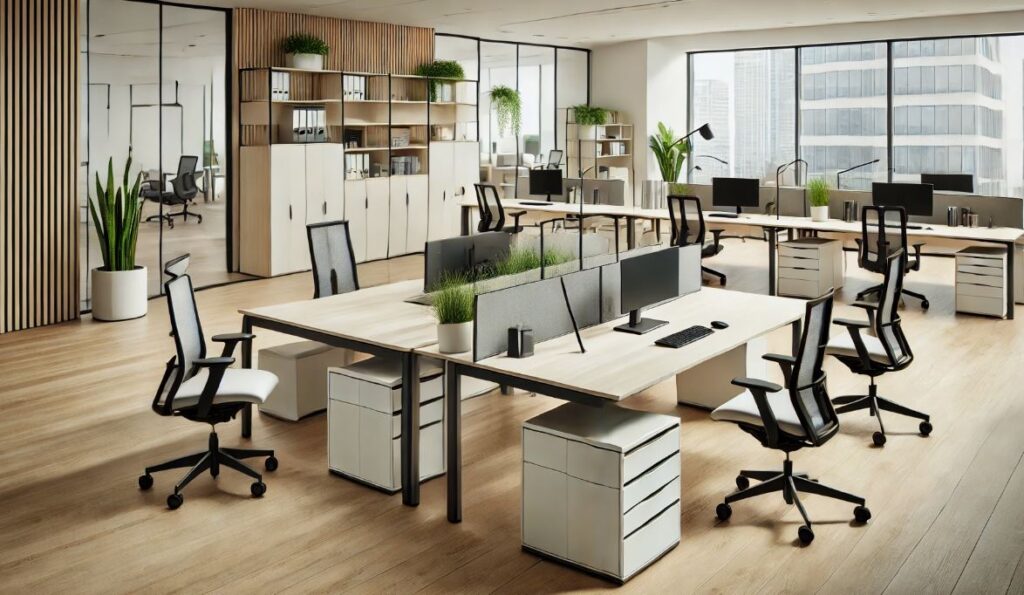
Modern offices increasingly combine natural-looking materials with contemporary layouts. Wooden surfaces can work well alongside glass partitions, metal frames, neutral walls, ergonomic chairs, acoustic panels, and modern lighting.
This makes wooden furniture particularly versatile. A simple wood-finish desk can fit a minimalist workspace, while a darker executive table can create a more traditional professional setting.
The goal should be consistency. Furniture finishes, room colors, lighting, flooring, and partitions should work together rather than competing for attention.
How to Create a More Productive Office Layout
Furniture placement matters almost as much as furniture selection.
Desks should provide sufficient personal working space without blocking circulation. Frequently used storage should be accessible without forcing employees to move across the office repeatedly.
Meeting areas should be positioned where discussions can take place without unnecessarily disturbing focused workers. Reception areas should provide clear visitor access while giving reception staff enough room to perform their tasks.
For larger offices, creating different zones for focused work, collaboration, meetings, and informal interaction can make the workspace easier to navigate.
Why Manila and Quezon City Businesses Need Practical Furniture Planning
Office requirements in Manila and Quezon City can vary considerably between startups, established companies, schools, government departments, professional firms, and other organizations.
Available floor space, building layouts, employee numbers, office expansion plans, and budget requirements all affect furniture decisions. Businesses should therefore avoid choosing furniture based solely on appearance.
A supplier or furniture specialist can help assess dimensions, recommend suitable configurations, and create a furniture plan around the actual requirements of the workplace.
Questions to Ask a Wooden Office Furniture Supplier
Before purchasing, ask whether the furniture can be customized, what materials are used, what finishes are available, and whether installation is included.
It is also useful to ask about expected lead times, delivery coverage, warranty terms, maintenance requirements, and replacement hardware.
For larger office projects, request a detailed quotation that clearly identifies dimensions, materials, quantities, finishes, delivery, and installation. This makes it easier to compare proposals accurately.
How Modern Office Table Designs Can Support Your Office Project
When planning a new workspace or upgrading an existing one, Modern Office Table Designs can be considered as part of a broader furniture planning approach. The focus should be on matching furniture with the office’s dimensions, working patterns, storage requirements, and professional appearance.
Whether you need individual desks, executive tables, workstations, meeting tables, or coordinated storage, a carefully planned furniture package can create a more cohesive workspace.
For businesses searching for office furniture in Manila or Quezon City, discussing your floor plan and requirements before purchasing can help avoid costly mistakes. A professional quotation can also provide a clearer understanding of the available configurations and overall project requirements.
Final Thoughts on Choosing Wooden Office Furniture
The right office furniture should support people as well as the appearance of the workplace. Wooden Office Furniture can provide a versatile foundation for offices that want a professional, comfortable, and welcoming environment.
The most important considerations are material quality, dimensions, construction, storage, functionality, layout, maintenance, and long-term requirements. Instead of choosing furniture simply because it looks attractive, consider how it will perform during everyday office use.
For businesses in Manila and Quezon City, the best approach is to evaluate the entire workspace before ordering. Measure the area, understand employee needs, determine storage requirements, select appropriate materials, and compare complete quotations.
A thoughtfully planned office can make better use of available space while creating an environment that feels organized and professional. Whether you are furnishing a small startup or planning a larger corporate project, choosing the right wooden desks, workstations, tables, and storage solutions can make a meaningful difference to the finished workplace.