Latest Office Furniture Trends Metro Manila Saving Tips
The latest office furniture trends are rapidly reshaping how workplaces look, feel, and function in 2026. Businesses today are no longer focused only on filling spaces with desks and chairs; instead, they are prioritizing comfort, productivity, flexibility, and employee well-being. Modern offices are becoming more dynamic, and furniture plays a key role in creating environments that support collaboration as well as focused individual work. From ergonomic seating to modular layouts, companies are now investing in smarter solutions that adapt to changing work styles. The demand for flexible setups in offices and stores is also increasing, as organizations want furniture that can easily be rearranged or upgraded without major cost or disruption. This shift reflects a deeper understanding of how physical space impacts performance, creativity, and employee satisfaction.
Ergonomic Design As A Core Workplace Priority
One of the strongest latest office furniture trends is the increasing focus on ergonomic design. Companies are now prioritizing chairs, desks, and accessories that support healthy posture and reduce physical strain during long working hours. Adjustable chairs with lumbar support, sit-stand desks, and monitor risers are becoming essential in modern office setups. This trend is especially important in corporate environments where employees spend most of their day seated. Ergonomic furniture not only improves comfort but also helps reduce workplace injuries and fatigue, leading to higher productivity. Many offices and furniture stores are now offering customized ergonomic solutions to meet specific employee needs, ensuring that every workstation promotes better health and efficiency. The shift toward ergonomics is not just a luxury anymore; it is a necessary investment for sustainable workplace design.
Flexible And Modular Office Layouts
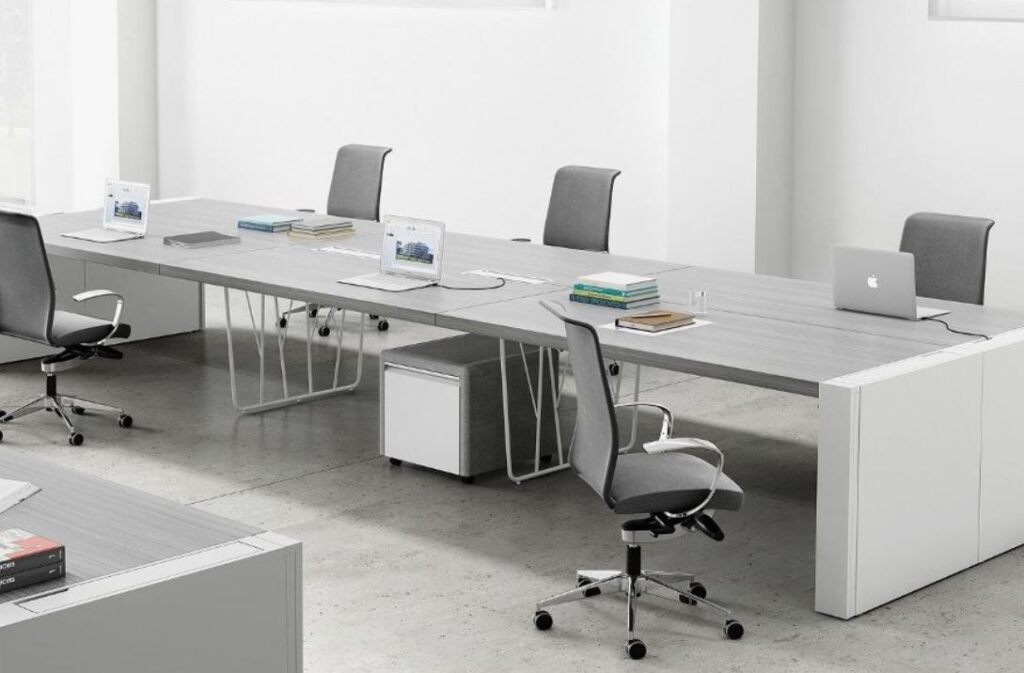
Another major direction in latest office furniture trends is the rise of flexible and modular furniture systems. Traditional fixed layouts are being replaced with movable desks, foldable tables, and reconfigurable seating arrangements. This allows companies to quickly adapt their workspace for meetings, collaborative sessions, or individual work without redesigning the entire office. Modular furniture is especially popular in startups and creative industries where team sizes and project needs change frequently. Offices and stores are increasingly showcasing modular systems that can be expanded or reduced depending on space requirements. This flexibility also supports hybrid working models, where employees alternate between remote and in-office work. The ability to redesign spaces easily helps businesses maximize efficiency while maintaining a modern and organized appearance.
Sustainable And Eco Friendly Office Furniture Choices
Sustainability is becoming a defining factor in latest office furniture trends as businesses aim to reduce their environmental impact. Companies are now choosing furniture made from recycled materials, responsibly sourced wood, and low-emission manufacturing processes. Eco-friendly office furniture not only supports environmental goals but also enhances brand reputation and workplace morale. Many organizations prefer minimalist designs that use fewer materials while still maintaining durability and style. Furniture stores are also expanding their eco-friendly collections to meet growing demand. This includes desks made from reclaimed wood, chairs with recyclable components, and packaging that minimizes waste. The shift toward sustainability is expected to continue as more companies adopt green policies and environmentally conscious purchasing decisions become standard practice.
Technology Integrated Smart Office Furniture
Technology integration is transforming latest office furniture trends by introducing smart desks, wireless charging stations, and digitally connected workstations. Modern office furniture now often includes built-in USB ports, cable management systems, and height-adjustable desks controlled through mobile apps. These innovations are designed to improve convenience and reduce clutter in workspaces. Smart furniture also supports better productivity by enabling employees to customize their workspace settings based on personal comfort preferences. In many offices and stores, tech-enabled furniture is becoming a key selling point, especially for companies looking to create advanced digital workplaces. This trend reflects the growing need for seamless connectivity in professional environments where technology plays a central role in daily operations.
Minimalist Aesthetic And Clean Workspace Design
Minimalism continues to dominate latest office furniture trends as businesses prefer clean, clutter-free environments that enhance focus and efficiency. Simple designs with neutral colors, smooth surfaces, and functional layouts are widely adopted in modern offices. The goal is to create spaces that reduce distractions and promote mental clarity. Minimalist office furniture often includes compact desks, hidden storage solutions, and sleek seating options that maximize space utilization. Offices and stores are increasingly showcasing minimalist collections that combine style with practicality. This design approach also aligns with modern architectural trends, where open spaces and natural lighting are emphasized. A minimalist workspace not only looks professional but also creates a calming atmosphere that supports better decision-making and productivity.
Collaborative Workspaces And Social Office Design
Collaboration is another key element shaping latest office furniture trends as companies encourage teamwork and communication. Modern offices are being designed with open seating areas, lounge-style meeting zones, and shared desks that promote interaction among employees. Comfortable sofas, round tables, and informal seating arrangements are replacing traditional closed meeting rooms. This approach helps improve creativity and idea sharing within teams. Many organizations are also integrating social spaces within their offices to support relaxation and informal discussions. Furniture stores are responding by offering more versatile seating and collaborative furniture solutions that fit these evolving needs. The result is a more engaging and interactive workplace environment that supports both productivity and employee satisfaction.
Conclusion: Future Of Office Furniture Design
The latest office furniture trends clearly show a shift toward smarter, healthier, and more flexible work environments. Businesses are focusing on ergonomic comfort, sustainability, technology integration, and collaborative designs to meet the demands of modern work culture. As workplaces continue to evolve, furniture will play an even more important role in shaping employee experience and organizational efficiency. Companies that invest in adaptable and forward-thinking designs will benefit from improved productivity and stronger workplace satisfaction. In this evolving landscape, Modern office table designs continues to represent the direction in which office interiors are moving, combining functionality, innovation, and style to meet the needs of future workplaces.