Office Cubicles Manila for Functional Workplace Planning
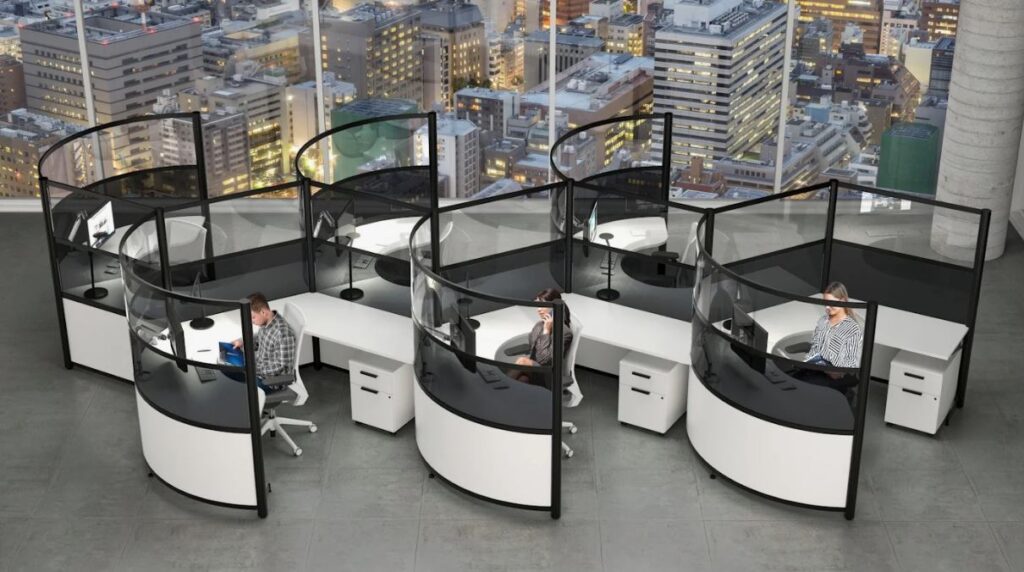
Choosing the right Office Cubicles Manila businesses need for productivity, privacy, and efficient space planning requires more than selecting desks and partitions. A well-designed cubicle system can help companies organize employees, improve workflow, manage available floor space, and create a professional workplace. For offices in Manila and Quezon City, factors such as room dimensions, employee requirements, ventilation, lighting, storage, mobility, and budget should all be considered before purchasing.
What Are Office Cubicles?
Office cubicles are modular workstation systems designed to divide an open office into individual or shared work areas. A typical cubicle may include a work surface, partition panels, storage, cable-management features, and accessories.
Unlike permanent walls, modular cubicles can often be rearranged when a company changes its seating plan. This makes them suitable for startups, growing businesses, corporate offices, schools, government departments, and other organizations that need adaptable workspaces.
The right configuration depends on the type of work being performed. Employees who frequently collaborate may need lower partitions and shared tables, while teams handling confidential information may benefit from greater visual and acoustic separation.
Why Businesses in Manila Choose Cubicle Workstations
Manila offices often need to make effective use of limited floor space while still providing employees with functional workstations. Cubicles can create defined work zones without requiring every employee to have a separate enclosed room.
A carefully planned layout can provide dedicated areas for individual work, team collaboration, meetings, storage, and circulation. It can also make it easier for managers and designers to create a consistent office environment.
For businesses comparing office furniture Philippines suppliers, the important consideration is not simply how many workstations can fit into a room. The layout should allow employees to move comfortably and access essential equipment without creating unnecessary congestion.
Office Cubicle Designs for Different Business Needs
There is no single cubicle configuration suitable for every organization. Different departments may require different workstation arrangements.
Straight Workstations
Straight cubicles are practical for employees who primarily work at computers. They can be arranged in rows or groups and are useful where efficient use of floor space is a major consideration.
L-Shaped Cubicles
L-shaped workstations provide additional desk surface and can separate computer work from paperwork or meetings. They may be suitable for supervisors, administrative employees, designers, and professionals who require more workspace.
Cluster Workstations
Cluster layouts place several employees together around a shared configuration. This arrangement can encourage communication between team members while maintaining defined personal work areas.
Bench-Style Workstations
Bench systems use shared desk structures with minimal separation. They can create a more open environment and are often considered for collaborative teams that do not require extensive privacy.
Executive Workstations
Employees with managerial or executive responsibilities may require larger surfaces, additional storage, and more privacy. An executive workstation can combine a primary desk with side storage or return surfaces.
How to Select Office Cubicles in Manila
Before ordering workstation furniture, businesses should assess their actual requirements. Start by measuring the available floor area, identifying entrances and walkways, and determining where electrical and network connections are located.
Next, calculate the number of employees who will use the space. Consider whether the company expects to hire additional staff in the near future. A modular solution can be useful when future expansion is likely.
The nature of the work should also influence the selection. Customer service teams, accounting departments, creative teams, IT staff, and administrative employees may have different needs for privacy, storage, collaboration, and equipment.
Finally, consider materials, durability, maintenance, cable management, lighting, ergonomics, and the overall appearance of the office.
Important Features to Look For
When comparing office cubicles, look beyond appearance. Several practical features can influence everyday usability.
Modular construction can make future changes easier. If the business expands or departments move, modular components may provide greater flexibility than fixed installations.
Cable management is particularly important in technology-dependent offices. Properly managed electrical and data cables can help keep workstations organized and reduce visual clutter.
Storage integration can provide employees with convenient access to documents and equipment. Mobile pedestals, overhead storage, drawer units, and side cabinets can be incorporated depending on the workstation design.
Partition height should match the desired level of privacy. Lower panels can support communication, while higher configurations can create more visual separation.
Durable materials are important for workplaces with frequent daily use. Surfaces should be practical to clean and suitable for the expected workload.
Office Cubicles and Workplace Productivity
Furniture alone does not guarantee higher productivity, but workplace design can influence how employees interact with their surroundings. A poorly planned office may create unnecessary distractions, difficult circulation, insufficient storage, or uncomfortable working conditions.
A thoughtful cubicle layout can establish clear personal work areas while preserving opportunities for communication. It can also help businesses organize departments logically.
Lighting should be considered alongside workstation placement. Avoid positioning screens where employees experience excessive glare, and ensure that work areas receive appropriate illumination.
Ergonomic considerations are equally important. Desk height, chair adjustment, monitor position, keyboard placement, and sufficient legroom should be considered as part of the complete workstation rather than treated as separate issues.
Office Cubicles for Small Businesses and Startups
Startups often need furniture that can adapt as their teams grow. Instead of designing a workspace around today’s employee count alone, businesses can consider modular workstation systems that allow additional units or reconfiguration later.
For a small office in Manila, a well-planned layout can combine compact workstations with a small meeting area, storage zone, and reception space. This approach helps businesses maintain a professional appearance without using every square meter for individual desks.
Flexible office furniture can also be useful when teams change frequently. Departments can be reorganized without completely replacing the existing furniture system.
Office Cubicles for Corporate Offices
Large organizations typically need consistency across departments. Cubicles can help create standardized workstations while allowing selected teams to have different configurations.
Corporate office planning may include staff workstations, team-leader desks, meeting areas, storage systems, collaboration spaces, and executive offices. Using compatible furniture throughout the workplace can create a cohesive visual environment.
Procurement teams should also consider delivery, installation, warranty terms, replacement components, maintenance requirements, and after-sales support when comparing suppliers.
Office Cubicles for Quezon City Workplaces
Businesses searching for office cubicles Quezon City options should consider both the furniture itself and the practical requirements of the installation site. Building access, elevator dimensions, delivery schedules, floor plans, and installation conditions can affect the project.
Architects and interior designers may also need detailed dimensions, material specifications, finishes, workstation configurations, and layout options before finalizing a project.
A supplier that can support planning as well as furniture selection can make the procurement process easier for larger office projects.
How to Plan a Cubicle Layout
Effective workstation planning starts with the floor plan. Mark entrances, emergency routes, columns, windows, doors, power outlets, and other fixed features before positioning furniture.
Then establish the major functional zones. Decide where employees will work, where teams will collaborate, where meetings will take place, and where storage will be positioned.
After that, determine workstation orientation. Consider natural light, screen glare, communication between employees, privacy requirements, and walking paths.
Finally, review the proposed layout from an employee’s perspective. There should be enough room to enter and leave each workstation comfortably, move between departments, and access shared facilities.
Common Mistakes When Buying Office Cubicles
One common mistake is purchasing furniture before measuring the office accurately. Even attractive workstations can become problematic when they obstruct doors, walkways, windows, or equipment.
Another mistake is choosing the same partition height for every department without considering privacy requirements. Different teams may need different levels of separation.
Businesses should also avoid focusing only on the initial price. Durability, installation, maintenance, warranty coverage, replacement parts, and future flexibility can affect the long-term value of an office furniture investment.
Ignoring employee ergonomics is another avoidable issue. A visually appealing office can still be uncomfortable if desks, chairs, monitors, and storage are poorly positioned.
What Should You Ask an Office Furniture Supplier?
Before requesting a quotation, prepare the basic information about your project. This can include office dimensions, employee numbers, preferred workstation type, estimated budget, desired materials, and expected installation date.
Ask about:
- Available cubicle configurations
- Materials and surface finishes
- Partition options
- Cable-management systems
- Storage accessories
- Installation services
- Warranty coverage
- Replacement components
- Delivery arrangements
- Customization options
- Future expansion possibilities
Providing a floor plan can also help the supplier recommend a more suitable workstation arrangement.
Office Cubicles Manila Buying Guide
When comparing Office Cubicles Manila options, businesses should evaluate the complete solution rather than choosing furniture based solely on appearance or price. The ideal workstation system should suit the available space, employee workflow, privacy requirements, storage needs, technology setup, and future growth plans.
For larger projects, it can be useful to request a detailed quotation and workstation layout before making a final purchasing decision. This allows procurement teams, architects, and business owners to compare specifications more accurately.
A professional supplier can also help identify practical considerations that may be overlooked during initial planning.
FAQs
What are office cubicles used for?
Office cubicles create defined workstations within an open-plan office while providing employees with dedicated work areas and varying levels of privacy.
Are cubicles suitable for small Manila offices?
Yes. Properly planned cubicles can make efficient use of smaller office spaces while maintaining organized individual work areas.
Can office cubicles be customized?
Many modular workstation systems can be configured with different desk shapes, partitions, storage units, finishes, and accessories.
How do I choose the right cubicle size?
Start with the available floor area and employee requirements, then consider desk equipment, storage, circulation space, and privacy needs.
Are cubicles suitable for startups?
Yes. Modular configurations can be useful for startups because workstation layouts can potentially be adjusted as teams and departments grow.
What should I consider besides the price?
Consider durability, materials, ergonomics, installation, warranty, maintenance, cable management, storage, and future flexibility.
Can cubicles be used in Quezon City offices?
Yes. Cubicle systems can be planned for many types of workplaces in Quezon City, including corporate offices, startups, schools, and professional workplaces.
Build a More Functional Office Environment
A successful office furniture project begins with understanding how people actually use the workplace. The right cubicle configuration can help organize employees, improve space utilization, support privacy, and create a consistent professional environment.
If you are comparing Office Cubicles Manila solutions for a new office, renovation, expansion, or relocation, start with your floor plan and employee requirements. Then compare workstation configurations, materials, storage, installation, and long-term flexibility before making a purchase.
For businesses planning an office furniture project, Modern Office Table Designs can be considered as part of the supplier research process. Requesting a quotation, discussing your floor plan, or arranging a showroom consultation can help you determine which workstation configuration fits your specific requirements.